Washer-and-Sink Wooden Playset: Cleaning Pretend Play
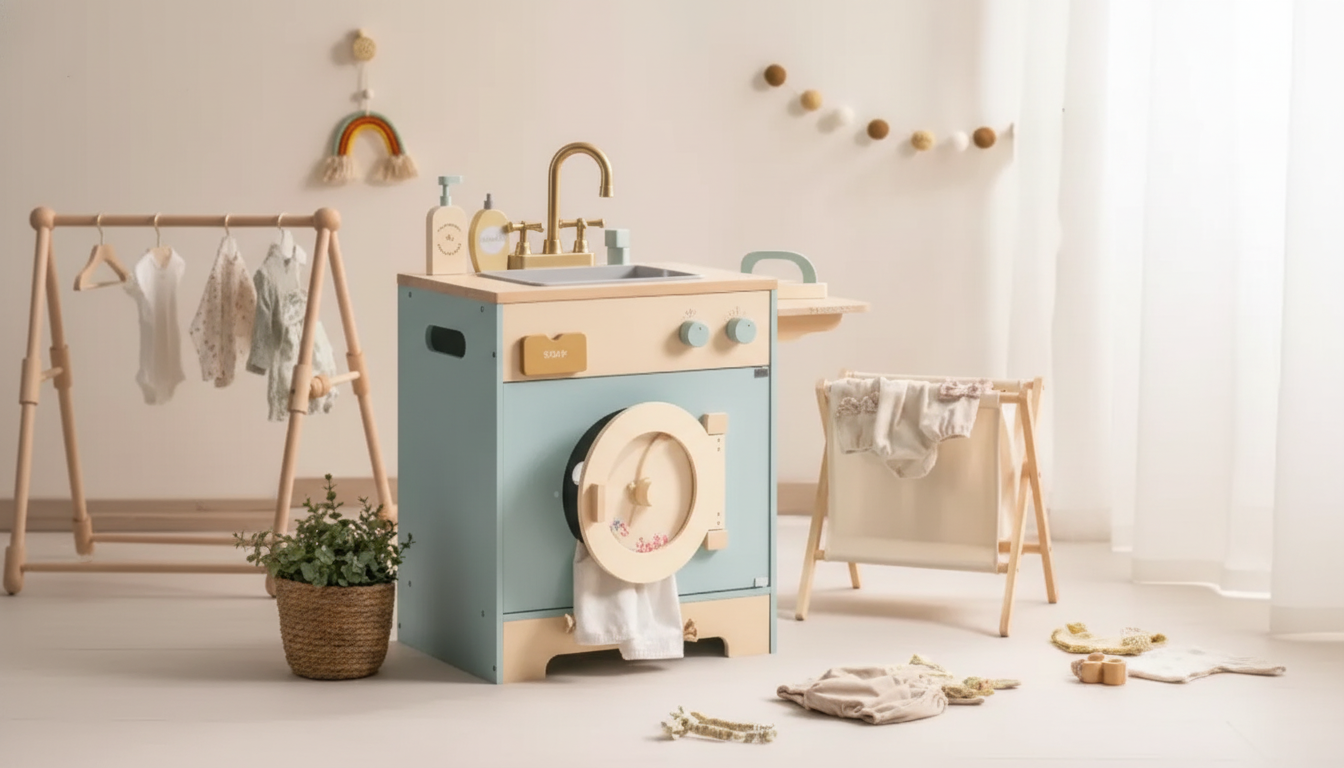
Wooden Kitchen Washer Playset with Sink and Accessories: Pretend-Play Cleaning Made Fun
A wooden kitchen washer playset brings everyday routines into imaginative play, letting kids “wash,” “rinse,” and “tidy up” with their own sink and accessories. With sturdy materials and realistic details, it supports open-ended role-play, cooperation, and early life skills—without the mess of real water and appliances. For families building a play kitchen corner or classroom dramatic-play area, a combined washer-and-sink station adds fresh storylines beyond cooking, while still feeling familiar and satisfying for kids who love “helping.” For more guidance, see 8 Best Wooden Play Kitchen Sets For Toddlers and Kids (2020 ….
Play-based learning is widely recognized as essential for healthy development, including social skills, language, and self-regulation. For a deeper look at why pretend play matters, see the American Academy of Pediatrics guidance on the importance of play and NAEYC’s overview of play and learning. For further reading, see Modern Kitchen Mini Kitchen Play Set Home … – Spring Canyon.
What’s Included and How It Works
A washer-and-sink playset is designed as a self-contained “cleaning station” that invites kids to run through routines: sort items, “wash,” “rinse,” and “put away.” Because everything is sized for small hands, children can run the show independently or team up with siblings and friends.
- Wooden washer-and-sink setup designed for pretend laundry and dishwashing play
- Accessory set encourages role-play: washing, sorting, rinsing, and organizing
- Child-friendly size supports independent play and shared play with siblings or friends
- Works as a self-contained play station for kitchen, playroom, or classroom corners
At-a-Glance Details
| Feature | What to Look For | Why It Matters |
|---|---|---|
| Sink area | Smooth basin edges and easy-to-reach placement | Comfortable play and fewer bumps/scrapes during active role-play |
| Washer section | Stable body with kid-friendly controls | Realistic interaction and less tipping when kids press/turn parts |
| Accessories | A mix of cleaning/laundry pretend items | More play scenarios: sorting, washing, drying, and “putting away” |
| Wood construction | Solid, well-finished panels | Durability for frequent use and better long-term value |
| Footprint | Fits a play corner without blocking pathways | Easier to keep set up as a daily play station |
Why Kids Love a Washer-and-Sink Play Station
Cleaning routines can be surprisingly fun in the world of pretend play. The steps are predictable (sort, wash, rinse, dry), the “tools” are satisfying to handle, and the end result is a neat, reset space that kids can feel proud of. A washer-and-sink set also blends naturally into other themes—restaurants, pet care, house play, and even “science lab” bubbling experiments (without actual liquids).
- Turns everyday routines into imaginative scenarios like “laundry day,” “restaurant cleanup,” or “house helper” games
- Supports language development through storytelling and role-based conversation
- Encourages cooperative play—taking turns, assigning roles, and sharing accessories
- Provides a satisfying sense of order through sorting, matching, and pretend organizing
Skills It Can Support During Play
Beyond being adorable and engaging, a pretend washer-and-sink station can reinforce foundational skills kids use every day. The most meaningful learning often happens when children repeat routines on their own terms—experimenting, narrating, and revising their “system” as they play.
- Fine motor skills: turning knobs, placing items, opening/closing parts, and handling small accessories
- Early math concepts: sorting by color/size, counting items, and sequencing steps (wash → rinse → dry)
- Social-emotional growth: practicing responsibility, empathy, and “helping” roles
- Executive function: planning a routine, following steps, and resetting the play area after use
Safety and Setup Notes for Everyday Use
A little setup care makes a big difference in how often a playset gets used—and how smoothly cleanup goes afterward. The goal is a stable, inviting station kids can access daily without it becoming a tripping hazard or a “too hard to manage” toy.
- Choose a spot on a flat surface to reduce wobble and support safe, energetic play
- Check finish quality: smooth edges and consistent paint/coating help prevent splinters
- Adult supervision recommended for younger children when small accessories are involved
- Keep accessories in a small bin nearby to make cleanup part of the play routine
Play Ideas That Keep It Fresh (Week-to-Week)
When kids start repeating the same script, small prompts can unlock brand-new storylines. Rotating roles, adding a “challenge,” or introducing a simple narrative problem (a muddy blanket! a busy restaurant rush!) helps extend play without adding clutter.
Product Spotlight: Wooden Kitchen Washer Playset with Sink and Accessories
If a single play station that blends dishwashing and laundry sounds like the right fit, the Wooden Kitchen Washer Playset with Sink and Accessories brings both routines together. It’s designed for repeat play sessions, especially for kids who love to imitate real household tasks and build little “systems” for sorting, washing, and resetting.
Quick Purchase Details
| Item | Price | Availability |
|---|---|---|
| Wooden Kitchen Washer Playset with Sink and Accessories | $81.01 USD | In stock |
More In-Stock Picks to Build a Learning-Through-Play Corner
- Wooden Multiplication Board for Kids for tactile practice with patterns and early math fluency.
FAQ
What age is a wooden washer-and-sink playset best for?
Most kids enjoy a washer-and-sink playset from the preschool years through early elementary ages, especially once they can confidently handle small accessories. For younger children, adult supervision helps ensure accessories are used safely and not mouthed.
Does the sink use real water?
These play sinks are typically intended for pretend play and do not require real water unless a specific model explicitly includes a water feature. Dry play helps protect the wood and keeps cleanup simple.
How can a washer playset encourage learning?
Kids practice sequencing (wash → rinse → dry), sorting and counting items, and fine-motor control as they turn knobs and place accessories. Role-play also builds language and cooperation through turn-taking and shared “job” assignments.







Leave a comment