Multi-Level Cat Tree Tower: Condo, Hammock & Top Perch

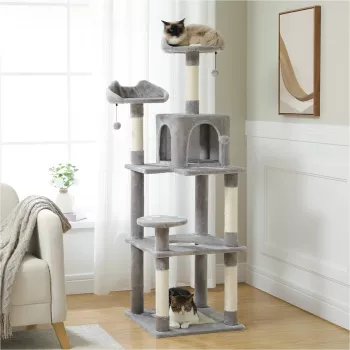
Multi-Level Cat Tree Tower with Scratching Posts, Condo, Hammock & Top Perch
A well-designed cat tree can turn a small corner into a complete vertical territory—climbing lanes, scratch zones, nap spots, and a lookout perch. This multi-level tower combines a condo hideaway, a hammock lounge, and multiple scratching posts to help cats burn energy, feel secure, and stay engaged indoors. For many households, adding vertical “cat real estate” is one of the simplest ways to support natural feline behaviors and create a calmer daily rhythm.
What This Cat Tree Adds to a Home
- Vertical space for natural behavior: Cats are wired to climb, perch, and observe. Extra height can help indoor cats stay active and mentally engaged.
- Clear scratch zones: Dedicated posts and textured surfaces give cats an appropriate place to scratch, stretch, and shed nail layers—often reducing attention on sofas and door frames.
- Rest choices that match the moment: The combination of a condo, hammock, and top perch supports both privacy and visibility, depending on mood and household activity.
- A predictable “cat zone”: Having consistent stations for play, rest, and retreat can reduce boredom and help cats settle into a routine.
Animal welfare organizations commonly emphasize enrichment and environmental structure—especially for indoor cats. For deeper guidance on building a supportive home setup, see the American Association of Feline Practitioners (AAFP) environmental needs guidelines and the ASPCA cat care resources.
Core Features at a Glance
- Multi-level layout: Encourages climbing, hopping, and “patrolling” from different heights.
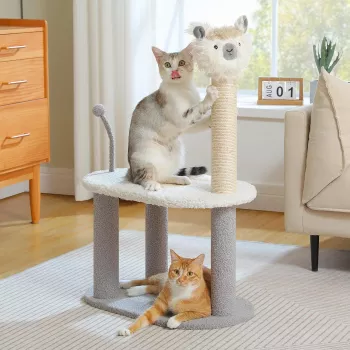
- Scratching posts: Provide a stable, textured surface for stretching and claw maintenance.
- Enclosed condo: Creates a quiet hideaway—useful for shy cats, overstimulated cats, or midday naps.
- Hammock-style bed: A cradled lounge spot many cats choose for longer, deeper rest.
- Top perch: A lookout point that works well near a window or in a main room for confident surveying.
Zones and what they’re best for
| Zone | Best for | Helpful for |
|---|---|---|
| Scratching posts | Full-body stretch and scratching | Redirecting scratching, nail shedding |
| Cat condo | Private rest and hiding | Stress reduction, multi-cat boundaries |
| Hammock | Curled-up lounging | Long naps, comfort |
| Top perch | Observing the room | Confidence building, window watching |
| Platforms/levels | Climbing and hopping | Daily exercise, enrichment |
Who It Suits (and When to Consider Something Else)
- Good fit for: Indoor cats that need more activity, cats that like height, and homes with limited floor space but usable vertical room.
- Especially helpful for: Cats that scratch furniture, cats that switch between hiding and hanging out, and cats that benefit from predictable “safe zones.”
- Consider other options if: A cat has severe mobility limits (look for low-rise steps or ramps), a very large-breed cat needs extra-wide platforms, or there’s no stable place to position the base.
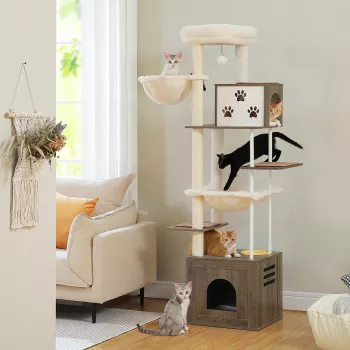
In multi-cat homes, a tower with distinct zones can reduce friction by giving each cat a “claimable” spot. The condo often becomes a retreat for the more cautious cat, while the top perch is frequently chosen by the confident observer who likes to monitor traffic.
Where to Place It for Maximum Use
- Near a window: Bird watching and outdoor movement can dramatically increase perch time and overall interest.
- In a social area: Cats can stay near the household activity without needing to be on counters or couches.
- Away from loud appliances: Quieter placement makes condo naps more likely and reduces startle events.
- Leave landing room: Keep a clear zone around the base so jumps are clean and confident.
- For multi-cat homes: Place it where cats can approach from more than one side to avoid “traffic jams” and cornering.
Small placement tweaks can have a big effect. If your cat ignores the tower at first, try moving it 2–3 feet closer to a window or rotating it so the top perch faces the room’s main action.
Stability, Safety, and Care Tips
Making It More Appealing to Cats
Product Snapshot
Multi-Level Cat Tree Tower with Scratching Posts, Cat Condo, Hammock & Top Perch
Price: $68.51 (in stock)
A balanced mix of scratch zones, lounging spaces, and a high perch designed for everyday indoor enrichment.
More In-Stock Finds
- Ergonomic Mesh Office Chair with Lumbar Support, Adjustable Headrest & 2D Arms — A supportive seat for long work sessions at home.
- Wooden Multiplication Board for Kids — A hands-on learning tool for practicing times tables.
FAQ
How do cats usually use a condo, hammock, and top perch on the same tower?
Most cats treat the condo as a private retreat for hiding or quiet naps, especially during busy household moments. The hammock often becomes the “deep rest” spot for longer lounging, while the top perch is commonly used for observing the room or window watching. Preferences can shift by time of day, noise level, and whether other pets are nearby.
How can scratching posts on a cat tree reduce furniture scratching?
Place the tree close to the furniture your cat targets, then reward your cat for using the posts so the new surface becomes the default choice. Make sure the post feels stable and tall enough for a full stretch, and refresh worn scratching areas so they stay satisfying. A light attractant like catnip can help redirect attention during the first week.
Where is the safest place to put a multi-level cat tree?
The safest spot is on a flat surface with enough clearance for jumping on and off without obstacles. Positioning it near a wall can add a sense of security, and placing it near a window can increase use as long as the base doesn’t slide. Check stability after setup and add a non-slip mat if the floor is slick.








Leave a comment