Clamp-On Manual Stainless Meat Grinder: Clean, Even Grind
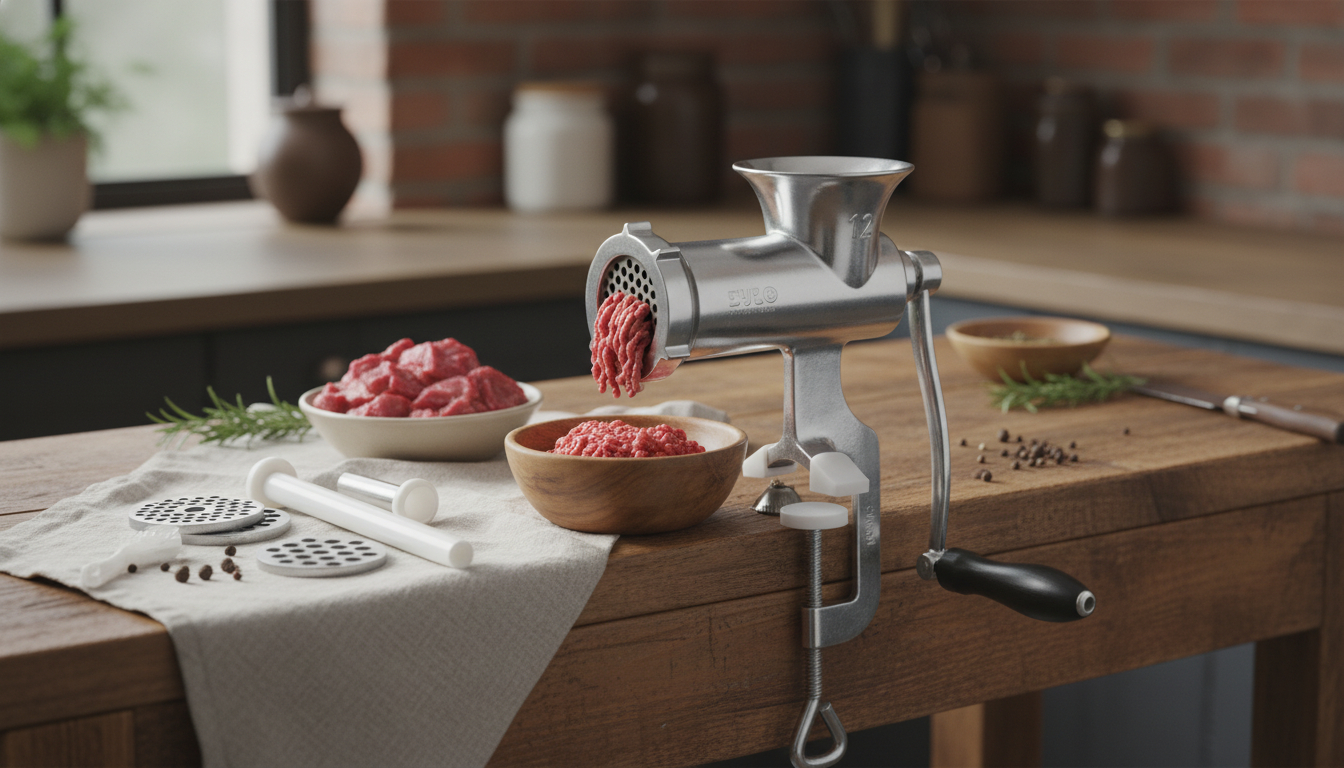
Manual Stainless Steel Meat Grinder with Clamp: Steady, Hands-On Control
A solid hand-crank meat grinder makes it easier to control texture, batch size, and freshness—without relying on electricity. A stainless steel build helps with durability and cleanup, while a clamp mount keeps the grinder steady for smoother, safer grinding. For home cooks who care about the bite of a burger, the springiness of a meatball, or a custom dumpling filling, a clamp-mounted manual grinder brings back a level of control that’s hard to get from pre-ground packs.
What a clamp-mounted hand grinder does well
A manual grinder shines when the goal is consistent results in small to medium batches and the flexibility to adjust as you go. It’s especially practical for everyday recipes where you want the meat to taste clean and the texture to match the dish.
- Grinds small to medium batches for burgers, meatballs, sausages, and dumpling fillings
- Gives control over texture by changing plates and re-grinding as needed
- Lets fat and lean be blended evenly, improving consistency compared with pre-ground meat
- Works anywhere a sturdy counter or table edge is available—no outlet required
- Clamp mounting reduces sliding and twisting when pushing meat through the auger
Stainless steel benefits in daily use
Stainless steel is popular for food tools for a reason: it handles frequent use, stays looking cleaner longer, and typically feels more solid when you’re putting torque on a crank handle.
- Resists rust and staining better than many plated or painted metals
- Holds up to repeated washing when dried promptly and stored clean
- Feels more rigid under load, which helps keep alignment stable during cranking
- Less likely to retain odors if cleaned thoroughly after fatty meats and aromatics (garlic, onion, spices)
At-a-glance checklist before buying
Small design details can make the difference between a smooth grind and a frustrating one. Focus on fit, cutting performance, and how quickly you can get everything clean after handling raw meat.
- Clamp range: confirm it fits the thickness of the intended countertop/table edge
- Feed opening and auger size: larger openings reduce prep time but need firm mounting
- Plate options: coarse and fine plates cover most home recipes; additional plates expand textures
- Blade and plate fit: tight, precise contact improves cutting and reduces smearing
- Disassembly: fewer steps and accessible parts make cleaning faster
- Replacement parts: availability matters for plates, blades, and clamp pads
Quick checklist for a clamp-mounted manual grinder
| Feature | What to look for | Why it matters |
|---|---|---|
| Clamp stability | Wide clamp face and secure tightening | Reduces wobble and makes cranking smoother |
| Stainless steel body | Solid stainless components where food contacts | Improves durability and helps with cleanup |
| Cutting set fit | Blade sits flush against the plate | Cuts cleanly instead of mashing the meat |
| Plate selection | At least one coarse and one fine option | Supports different recipes and textures |
| Ease of cleaning | Quick disassembly, reachable crevices | Less time cleaning; better hygiene |
How to get better results (less smear, more clean grind)
If ground meat looks pasty or smeared, the usual culprit is heat—often from warm fat, warm grinder parts, or aggressive cranking. A colder workflow produces a cleaner cut and more defined granules.
- Chill the meat: partially freeze cubes until firm but not solid; cold fat cuts cleaner
- Cut evenly: small uniform cubes feed consistently and reduce strain on the handle
- Trim deliberately: remove silverskin and tough tendons that can wrap around the knife
- Work in batches: keep the next batch in the fridge while grinding the current one
- Use a steady rhythm: fast cranking can warm the mixture and smear fat
- Re-grind only when needed: a second pass changes texture; keep everything cold for pass two
For food-safety timing and temperatures, keep prep efficient and cold. USDA guidance on safe handling for ground meats is a helpful reference: USDA FSIS — Ground Beef and Food Safety.
Setup tips for a secure clamp mount
A clamp-mounted grinder can feel impressively stable—if it’s attached to a surface that doesn’t flex and the clamp is tightened with clearance in mind.
Cleaning and food-safety essentials
For a clear overview of cleaning and sanitizing food-contact surfaces, see: FDA — Cleaning and Sanitizing Food Contact Surfaces.
Who this grinder fits best
Product options available now
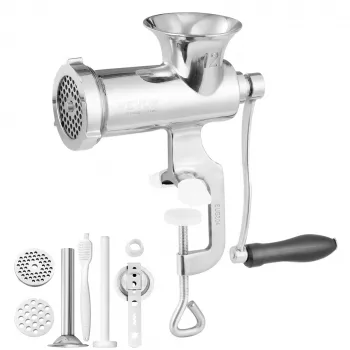
- Manual Stainless Steel Meat Grinder with Clamp ($109.01) — clamp-mounted, stainless steel manual grinder designed for stable hand-crank grinding and straightforward storage.
- Ergonomic Mesh Office Chair with Lumbar Support, Adjustable Headrest & 2D Arms ($119.01) — supportive seating for long prep planning, recipe work, or home office time.
- Ultra HD 4K WiFi Body Camera with Night Vision & Motion Detection ($24.51) — compact recording for hands-free documentation when you need it.
FAQ
Does a clamp-mounted manual grinder fit all countertops?
Clamp range varies by model, so measure your countertop or table edge thickness and confirm the clamp can open wide enough. Also check that there’s enough clearance for the clamp screw underneath and space on the side for the handle to rotate freely.
Why does ground meat sometimes come out pasty instead of crumbly?
Pasty meat usually happens when the fat warms up, the blade is dull, or the blade-to-plate contact isn’t seated tightly. Chill the meat (and even the grinder parts), cut uniform cubes, crank at a steady pace, and make sure the blade sits flush against the plate.
Can a manual grinder be used for making sausage?
Yes, as long as compatible stuffing tubes are included or available for the grinder. Keep the meat mixture very cold and work in smaller batches to reduce smearing and help the sausage feed and stuff more smoothly.










Leave a comment