20W GaN USB-C Charger: PD & QC 3.0 for Daily Fast Charge
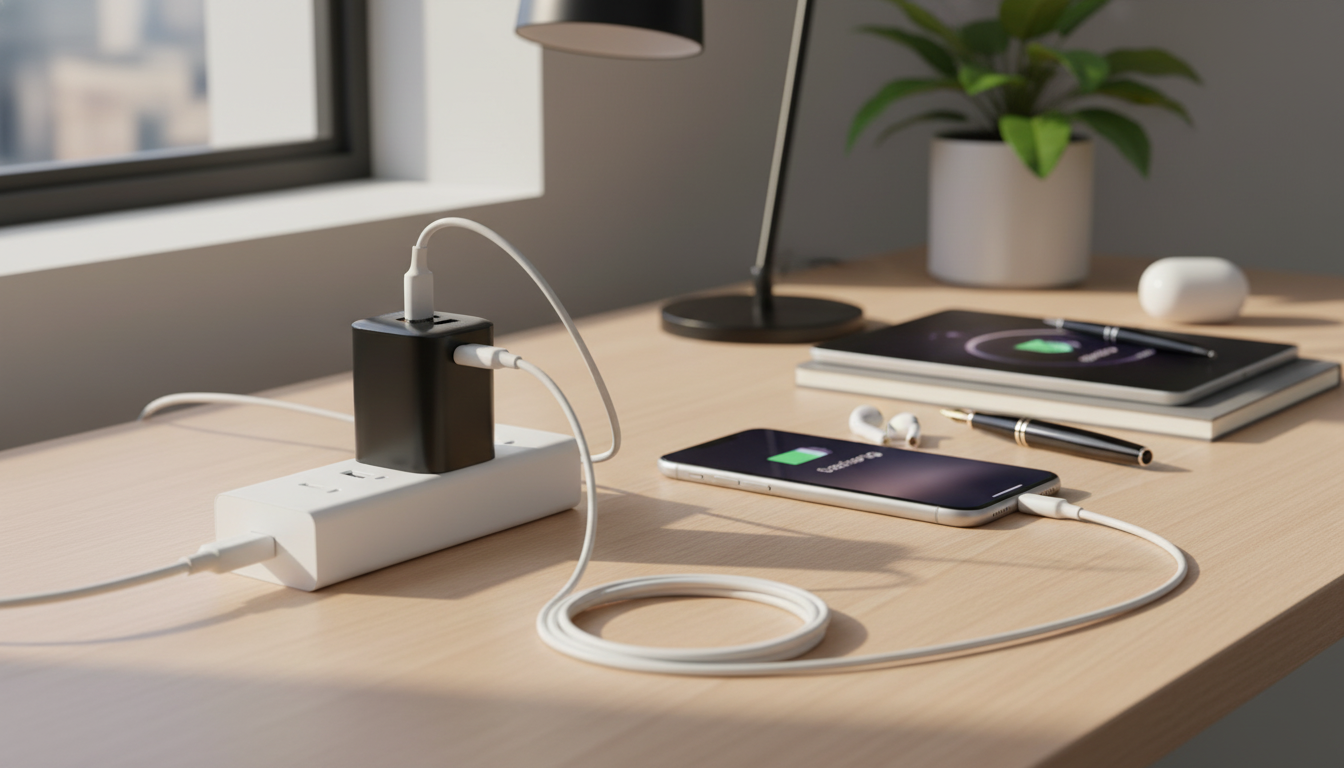
20W GaN USB‑C Fast Charging That Fits Everyday Life
A compact 20W GaN USB‑C wall charger can cover daily charging needs for phones, tablets, earbuds, and travel accessories while staying cooler and smaller than many older silicon chargers. With support for USB Power Delivery (PD) and Quick Charge (QC 3.0), it’s built to negotiate the right power profile for compatible devices, helping reduce charge times without juggling multiple bulky adapters.
What this charger is designed to do
- Delivers up to 20W from a single USB‑C port for fast top-ups at home, work, or on the go.
- Uses USB Power Delivery (PD) for broad compatibility across modern phones, tablets, handheld consoles, and accessories that accept USB‑C input.
- Supports QC 3.0 for compatible devices that use Qualcomm fast-charging profiles (where supported through USB‑C power negotiation).
- Targets practical daily charging: one small adapter that replaces slower 5W/10W blocks and many legacy travel chargers.
Why GaN matters in a 20W USB‑C charger
GaN (gallium nitride) has become the go-to material for compact fast chargers because it can switch power efficiently, which often means less wasted energy as heat. In a 20W class charger, those efficiency gains show up in real-world convenience: a smaller body that’s easier to pack, less likely to wobble in a loose wall outlet, and more comfortable to use in tight spaces like airport seating or behind a nightstand.
- GaN electronics can enable smaller chargers for the same wattage compared to many traditional silicon designs.
- Better efficiency typically means less wasted heat during charging, helping maintain stable performance over longer sessions.
- Compact size is especially useful for travel: less strain on loose outlets and easier packing alongside cables and adapters.
- GaN doesn’t automatically guarantee quality—safety features (over-current, over-voltage, and temperature protection) and reputable cables still matter.
Charging speed expectations for iPhone, iPad, and more
A 20W PD/QC charger is best thought of as a “daily fast” option: strong enough to noticeably reduce charging time for many phones and accessories, while still compact and simple. Actual speed depends on what your device supports and what’s happening during charging (screen brightness, GPS use, hotspot, gaming, and ambient temperature all affect results).
iPhone charging (Lightning and USB‑C models)
For Lightning iPhones, fast charging typically requires a USB‑C PD charger plus a USB‑C to Lightning cable. Under the right conditions, many models can reach around 50% in about 30 minutes, then slow down as the battery fills to protect long-term health. Apple explains the basics of fast charge requirements and behavior in its support guidance (Apple Support: Fast charge your iPhone).
iPad and other tablets
Many iPad models can negotiate Power Delivery and will charge efficiently from a 20W adapter, especially for everyday tasks and standby charging. Higher-end tablets may accept more than 20W, so they could charge faster with a higher-wattage charger—but 20W still works well for topping up during commutes, class, or meetings.
Android phones and mixed ecosystems
Android devices vary widely: some prioritize PD, others QC, and some rely on brand-specific protocols. When your phone supports PD or QC 3.0, it can request an appropriate power profile; if not, it will fall back to a basic, safe rate. For standard definitions and how negotiation works at a high level, see the references from USB-IF: USB Power Delivery and Qualcomm: Quick Charge Technology.
Compatibility and what to check before plugging in
Quick compatibility checklist (typical outcomes)
| Device type | Recommended cable | Likely result with a 20W PD/QC charger |
|---|---|---|
| iPhone (Lightning models) | USB‑C to Lightning | Fast charging supported on compatible models; speed tapers near full |
| iPhone (USB‑C models) | USB‑C to USB‑C | Fast charging via PD; cable quality influences stability |
| iPad (USB‑C) | USB‑C to USB‑C | PD charging; speed depends on iPad model and usage |
| AirPods / earbuds | USB‑C to USB‑C or device-specific cable | Efficient charging; often limited by small battery |
| Android phone (PD or QC 3.0) | USB‑C to USB‑C | Fast charging if supported; otherwise standard charging |
| Power bank (USB‑C input) | USB‑C to USB‑C | PD input charging if supported; may prefer higher wattage for fastest refill |
Safety and longevity tips for daily use
Where a compact 20W charger fits best
Product options available now
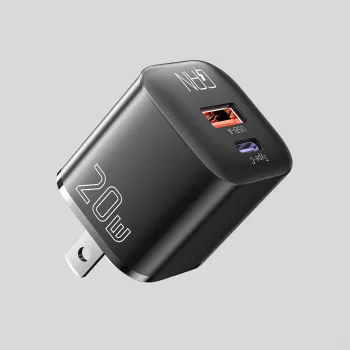
- 20W GaN USB-C Fast Charger – PD & QC 3.0 for iPhone, iPad & More — a compact single-port wall charger aimed at iPhone, iPad, and other PD/QC-compatible devices.
- Ultra HD 4K WiFi Body Camera with Night Vision & Motion Detection — a handy device to keep charged for commutes, rideshares, or personal safety routines.
- Ergonomic Mesh Office Chair with Lumbar Support, Adjustable Headrest & 2D Arms — a comfort upgrade for home-office setups where a dependable charger lives on the desk every day.
FAQ
Will a 20W USB‑C PD charger fast charge an iPhone?
Yes—compatible iPhone models can fast charge with a USB‑C Power Delivery charger and the correct cable (USB‑C to Lightning for Lightning iPhones, or USB‑C to USB‑C for USB‑C iPhones). Charging speed typically tapers as the battery approaches full.
Does QC 3.0 matter if a device uses USB Power Delivery?
Many modern devices use USB Power Delivery and will negotiate PD normally regardless of QC support. QC 3.0 mainly helps devices that request Qualcomm fast-charging profiles; devices that support neither will charge at a standard, lower rate.
Why is my phone still charging slowly with a fast charger?
Common causes include a low-quality or damaged cable, a device that doesn’t support PD/QC fast charging, heavy phone usage during charging, heat buildup, a dirty charging port, or a weak wall outlet or worn power strip.









Leave a comment