Do Cats Recognize Cat Trees? How to Get Them to Use One

Do cats know that cat trees are for them?
Cats don’t automatically “know” a cat tree was designed for them the way a person understands furniture. What they do recognize—often very quickly—are the features that match their instincts: height for safety, stable platforms for resting, posts for scratching, and cozy spots for hiding. If a cat tree offers those cues, many cats treat it as theirs within minutes; others need a little time and encouragement.
Why cat trees make sense to cats
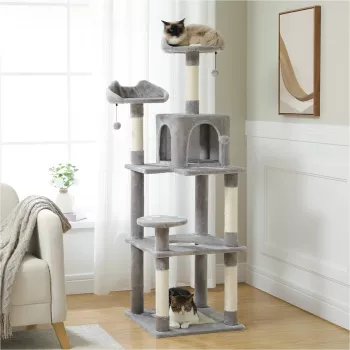
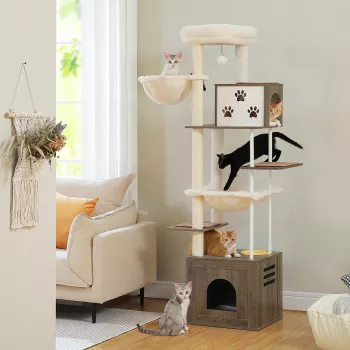
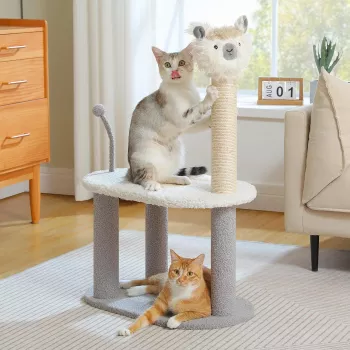
A well-built cat tree speaks your cat’s language. Elevation provides a lookout point and a way to avoid busy foot traffic. Covered condos and hammocks mimic secure resting places. Scratching surfaces help cats maintain claws, stretch their bodies, and leave scent markings, which is a normal way they “claim” an area.
When these elements are combined into a multi-level setup, cats often use it naturally as a route to climb, perch, nap, and observe. For tips on choosing a configuration with perches, condos, and levels that suit different cats and homes, see this guide to multi-level cat trees, towers, condos, hammocks, and top perches.
How to help your cat understand it’s a good place to use
If your cat ignores a new tree at first, it usually isn’t stubbornness—it’s caution and unfamiliar scent. Place the tree in a socially important area (near where your cat already rests, or by a window), and make it rewarding:
- Rub a soft cloth on your cat’s cheeks and wipe it on the posts and edges to transfer familiar scent.
- Scatter a few treats on lower platforms first, then gradually higher levels.
- Use a wand toy to guide your cat up and across the platforms without forcing contact.
- If your cat scratches the sofa, position the tree nearby so it becomes the easiest alternative.
What to do if your cat still won’t use the tree
Check the basics: wobble, cramped platforms, or a scratch post that’s too short can make a tree unappealing. Many cats prefer a sturdy base, tall vertical space, and scratch-friendly material. Adjusting placement (especially closer to a window or favorite room) often makes the biggest difference.
FAQ
Where should I place a cat tree in my home?
Put it where your cat already likes to hang out, ideally near a window or in a main living area. Avoid isolated corners and make sure the base sits flat and stable so climbing feels safe.








Leave a comment