2-Way vs 3-Way Manifold Gauges: HVAC & Auto A/C
What is the difference between 2-way and 3-way manifold gauge sets for HVAC and auto AC work?
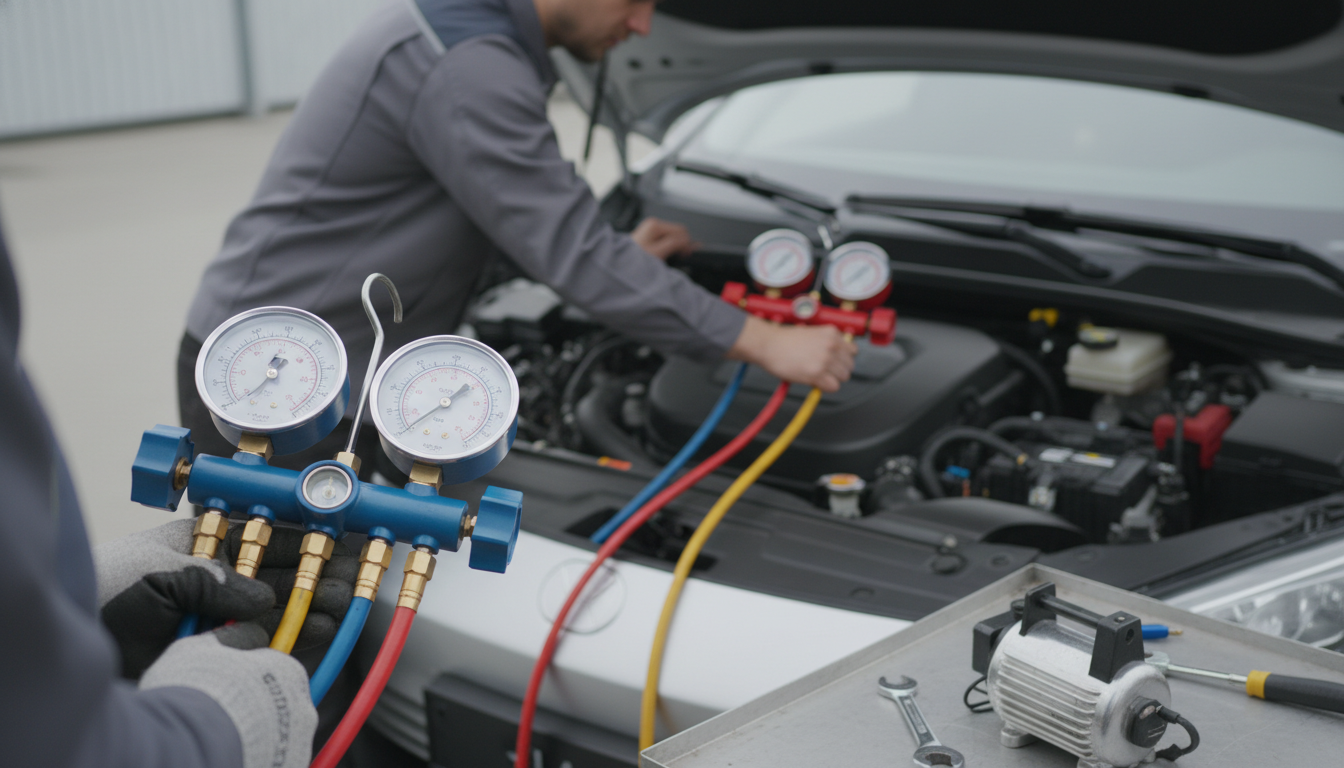
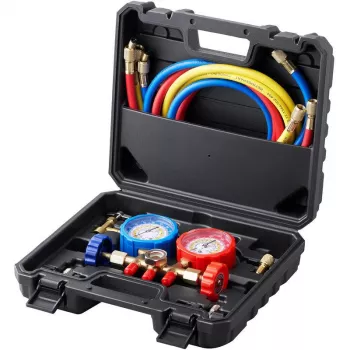
A 2-way manifold gauge set has two valves and two hoses—one for the low side (blue) and one for the high side (red). A 3-way manifold gauge set adds a third (center) service port and hose (often yellow) for charging, recovering, vacuuming, or connecting to additional equipment. The extra port is the practical difference: it expands what you can hook up and do without disconnecting lines.
How a 2-way manifold gauge set works
With a 2-way set, you’re mainly reading system pressures and controlling flow between the gauges and the connected service ports. It’s commonly used for basic diagnostics on HVAC or auto AC systems when you’re checking high/low pressures, verifying compressor performance, or confirming whether conditions point to undercharge/overcharge or restrictions.
Because there’s no dedicated center hose, adding refrigerant, pulling a vacuum, or connecting a recovery machine is less convenient (or requires different fittings/steps). For quick checks, though, a 2-way setup can be simpler and lighter.
How a 3-way manifold gauge set works
A 3-way set includes the same high and low connections, plus a center service hose that acts like a “utility” line. That third hose is typically used to connect a vacuum pump for evacuation, a refrigerant cylinder for charging, or recovery equipment. This makes a 3-way manifold the more versatile choice for full service work, not just pressure readings.
Which one is better for HVAC vs. auto AC?
For HVAC installs and major service (evacuating, charging by weight, recovery), a 3-way manifold is usually the better match because it’s designed to interface with the full tool chain. For auto AC, many techs still prefer a 3-way set for charging and evacuation, although some basic checks can be done with a 2-way set or even dedicated quick-coupler gauge tools.
For a deeper breakdown of ports, hoses, and use cases, see the full guide here: https://anenos.com/what-is-the-difference-between-way-and-way-manifold-gauge-sets-for-hvac-and-auto-ac-work/.
FAQ
Do I need a vacuum pump to service HVAC or auto AC systems properly?
For any job that opens the system (component replacement, line repair, major leak repair), a vacuum pump is typically needed to evacuate air and moisture before charging. Skipping evacuation can lead to poor cooling, corrosion, and compressor damage.











Leave a comment