Powerful 5-Gallon Wet/Dry Vac Suction: CFM vs Peak HP
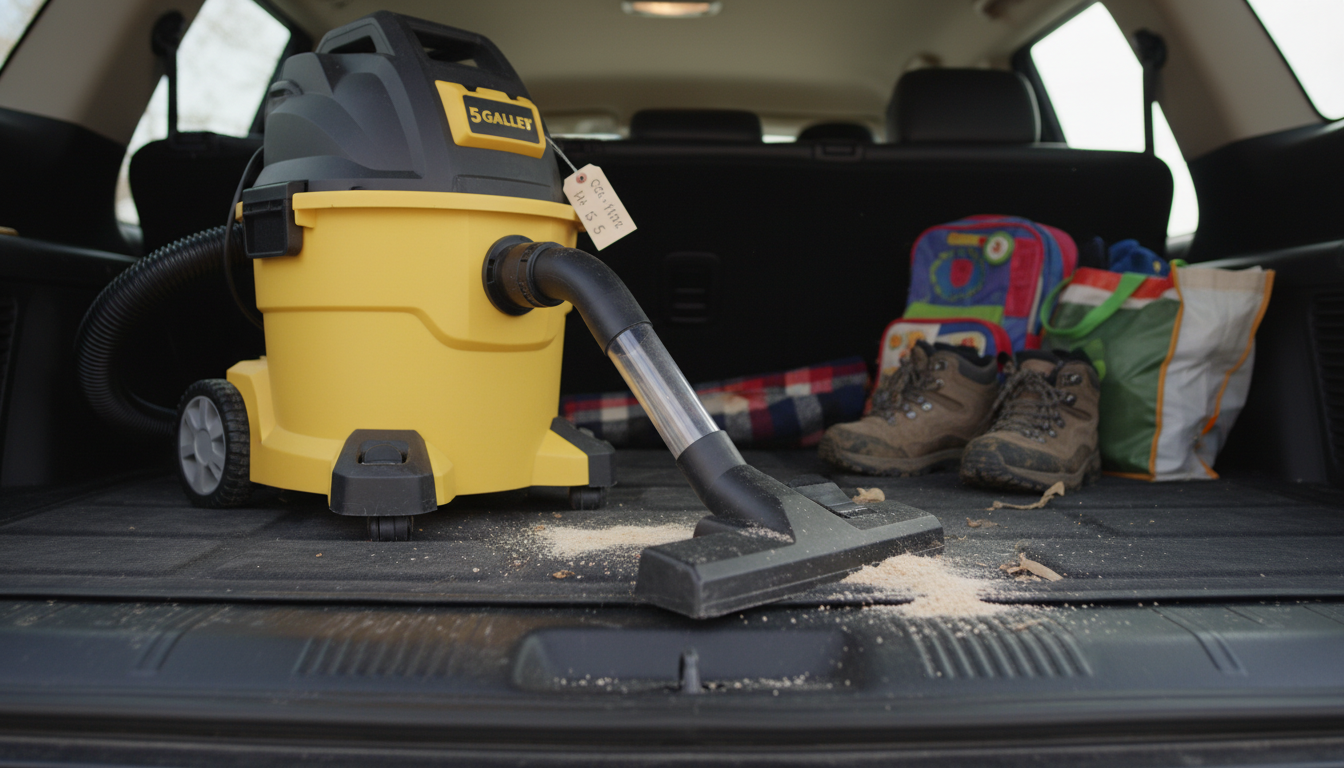
How much suction power (peak HP or CFM) should you look for in a powerful 5-gallon wet/dry vac?
For a “powerful” 5-gallon wet/dry vac, look beyond the tank size and focus on airflow and sealed suction. As a practical target, aim for about 90–120 CFM (cubic feet per minute) for fast pickup of dry debris and general garage cleanup, and consider 120+ CFM if you want stronger performance on heavier messes like sawdust piles, metal shavings, or wet sludge.
If CFM isn’t listed, check sealed suction (often shown as “water lift” in inches). A strong 5-gallon unit commonly lands around 45–65 inches of water lift, with higher numbers helping when you’re pulling through longer hoses, tight nozzles, or thick wet material.
Where peak HP fits in (and why it can be misleading)
Peak HP is frequently a marketing number that reflects a short, momentary maximum rather than steady cleaning power. For 5-gallon models, you’ll often see “peak” ratings in the 3–5+ HP range, but two vacs with the same peak HP can feel very different in real use. If you’re forced to choose one spec, prioritize CFM and water lift over peak HP for a clearer picture of performance.
Matching suction to real jobs
Use these quick benchmarks when comparing similarly sized 5-gallon vacs:
- Basic home/garage cleanup: ~90–110 CFM and ~45–55 in. water lift.
- Workshop debris (fine dust, sawdust, shavings): ~110–130 CFM and ~55–65 in. water lift.
- Wet pickup and thicker messes: higher water lift matters as much as CFM, especially with narrow attachments.
Also consider the hose diameter and attachment design: a restrictive nozzle can reduce effective airflow even if the motor is strong.
For more practical shopping guidance on features like blower capability, attachments, and garage-friendly design, see the main guide: 5-gallon wet/dry vacuum with blower for garage and home.
FAQ
What’s the difference between CFM and water lift on a wet/dry vacuum?
CFM measures how much air the vac moves, which affects how quickly it picks up loose debris. Water lift measures how strongly it can pull against resistance, which helps with heavier material, wet messes, and long hoses.









Leave a comment