Productivity Blueprint: Goals, Time Blocks & Daily Routines
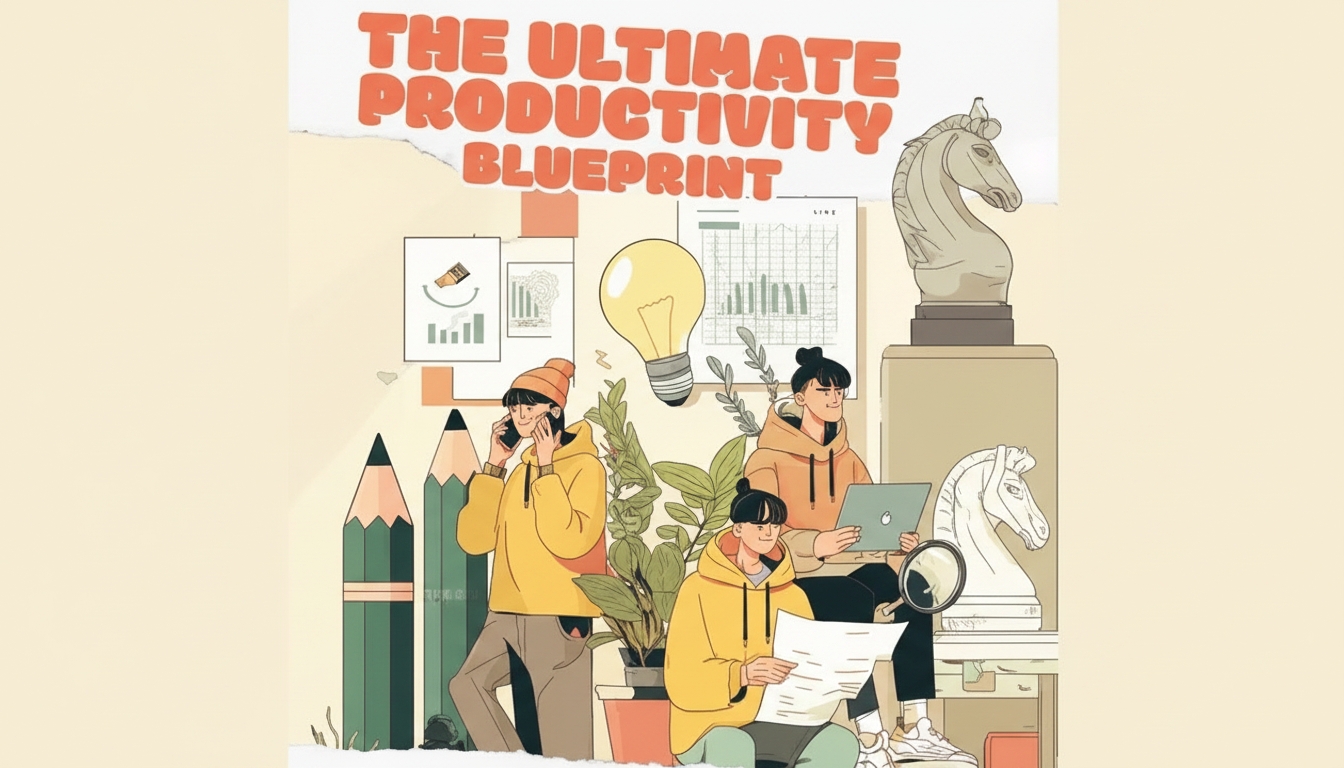
The Ultimate Productivity Blueprint: A Digital Guide to Goal Setting, Time Management, and Daily Routines
Productivity improves fastest when goals, time, and routines work as one system. This guide lays out a practical blueprint to move from vague intentions to clear priorities, focused work blocks, and repeatable daily rhythms—without relying on motivation alone. The sections below walk through setup, planning, execution, and review so progress stays visible and sustainable.
What “productive” means when it actually works
Many productivity problems aren’t effort problems—they’re definition problems. When “productive” only means staying busy, it’s easy to fill the day and still feel behind.
- Define outcomes before tasks: results (finish a draft, ship a feature, complete a module) beat activity (answer emails, attend meetings).
- Separate urgent from important: protect time for work that compounds (skills, health, relationships, core projects).
- Choose a single “north star” for the week: one priority that makes the rest easier, not harder.
- Use constraints deliberately: fewer commitments, fewer tools, fewer tabs—more follow-through.
Set goals that turn into actions
A goal only becomes useful when it produces a clear next step. The quickest way to close the gap between intention and execution is to define milestones and the smallest visible actions that move them forward. If you prefer a structured template, the The Ultimate Productivity Blueprint digital guide helps standardize this process so planning stays quick and repeatable.
- Translate goals into milestones: break a 90-day goal into 3–5 milestones, each with a clear completion definition.
- Add a “why that matters” line: connecting to values boosts persistence during low-energy days.
- Convert milestones into next actions: each milestone needs a smallest visible step that can be done in 15–30 minutes.
- Plan for friction: pre-decide what happens when time runs short (minimum viable version, reschedule rules, or pause rules).
From goal to next action (example mapping)
| Goal | Milestone | Next action | Done when |
|---|---|---|---|
| Improve fitness | Train 3x/week for 4 weeks | Schedule Mon/Wed/Fri sessions on calendar | 12 sessions completed |
| Launch a side project | Publish landing page | Write headline + benefits section | Page live with signup form |
| Reduce inbox stress | Daily email workflow | Create two filters + 2 processing blocks | Inbox processed in 20 min/day |
For a goal framework that’s easy to validate and communicate, SMART goals remain a reliable baseline; the American Psychological Association’s guide to making SMART goals offers a clear refresher.
Time management that protects focus
Time management is less about squeezing more into the day and more about ensuring the most valuable work has a protected place to happen.
- Time-block the day: assign blocks to deep work, shallow work, admin, and recovery; leave whitespace for the unexpected.
- Batch by context: group tasks that use the same tools or mindset (calls, writing, errands) to reduce switching costs.
- Use a “shutdown routine”: a short end-of-day checklist to capture loose ends and reduce after-hours mental load.
- Build a realistic weekly capacity: estimate how many deep-work hours exist after meetings, commuting, and life essentials.
- Handle interruptions with rules: define when messages are checked and what qualifies as truly urgent.
If focus collapses late day, it’s often an energy issue more than a scheduling issue. Harvard Business Review’s “Manage Your Energy, Not Your Time” is a useful reminder to plan work around renewal, not just availability.
Daily routines that stay consistent
Routines work when they reduce decisions. The goal isn’t a perfect day—it’s a default day you can return to quickly after disruptions.
Sleep quality is a force multiplier for attention and mood. The National Sleep Foundation provides research-backed guidance that pairs well with a consistent shutdown routine.
A digital system that doesn’t collapse under its own weight
Make progress measurable without overtracking
Tools and environment that support the blueprint
- Use a dedicated guide and templates to reduce decision fatigue when planning goals, weeks, and routines. The The Ultimate Productivity Blueprint | Digital Productivity Guide for Goal Setting, Time Management & Daily Routines is built for quick planning, simple reviews, and consistent follow-through.
- Upgrade the workspace for comfort: posture support and screen alignment reduce fatigue and help sustain focus. An Ergonomic mesh office chair with lumbar support can make long work blocks feel more sustainable.
- Choose one primary planning tool and one calendar: too many apps create fragmentation and missed commitments.
- If attention drifts easily, improve the default environment: fewer notifications, cleaner desk, and clear start/stop cues.
Common pitfalls and fast fixes
FAQ
How long does it take to build a sustainable daily routine?
Expect several weeks to make a routine feel natural, with the biggest gains coming from a small “minimum routine” you can do even on hectic days. Anchor habits to existing triggers and use a weekly review to adjust the routine instead of restarting from scratch.
What’s a simple way to plan a day when the schedule is unpredictable?
Use time blocks with buffers, then choose 1–3 outcome priorities that still count as a win if everything else shifts. Do a quick morning plan and a short midday re-plan to reassign the next best block when surprises hit.
How many goals should be active at the same time?
Limit active goals to 1–3 meaningful ones and cap the number of in-progress projects so attention isn’t diluted. Use milestones to keep each goal moving without trying to advance everything at once.











Leave a comment