Cactus Litter Scooper + Holder: Cleaner Box, Less Mess
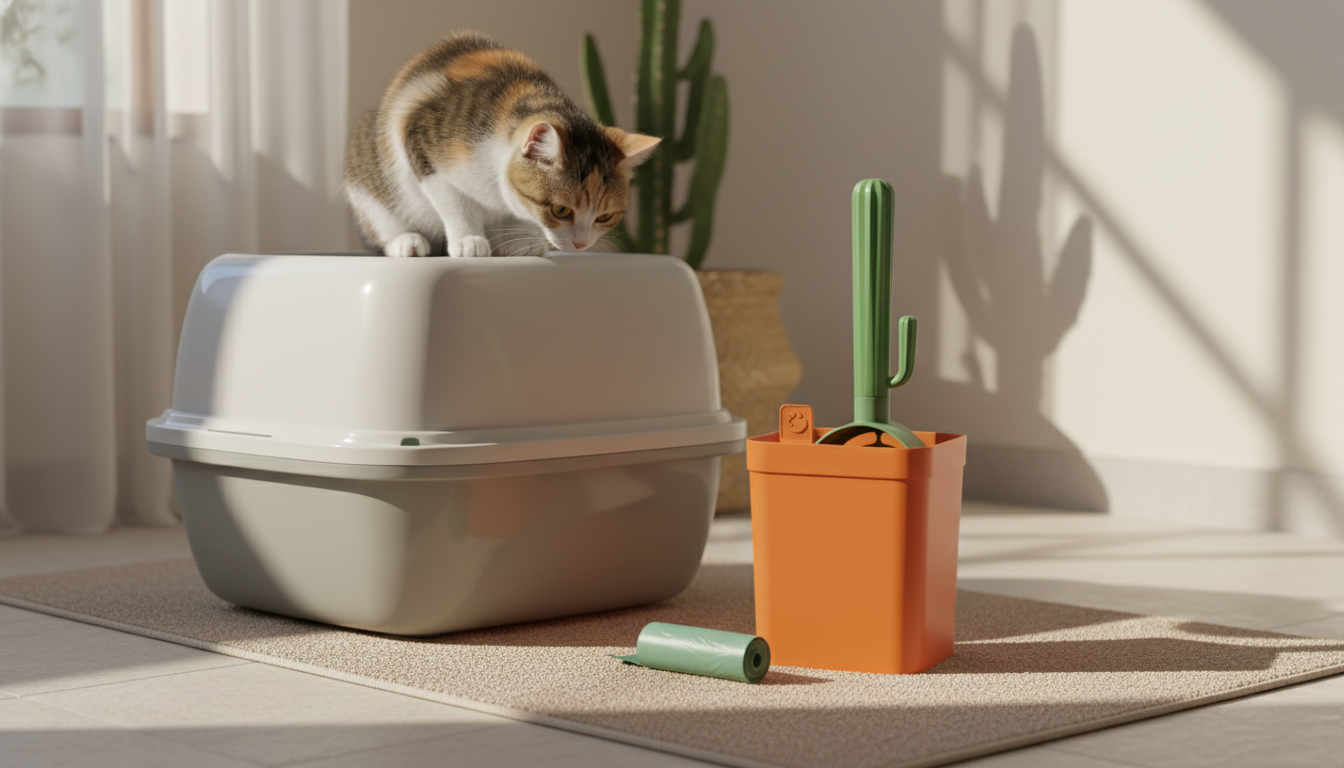
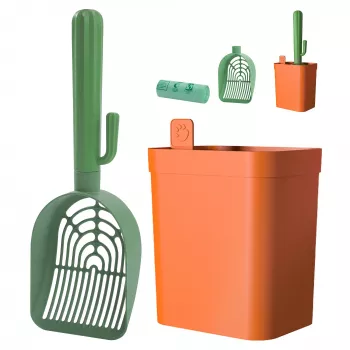
Cactus Cat Litter Scooper with Holder
A tidy litter area comes down to small tools that are easy to grab, easy to clean, and easy to store. This cactus-themed scooper with a matching holder is designed to keep the scoop contained between cleanups while adding a playful touch to the litter corner. By giving your scooper a dedicated “parking spot,” it’s simpler to stay consistent with quick daily maintenance—often the difference between a fresh-smelling box and a lingering odor issue.
What Makes a Scooper-and-Holder Set Helpful
A scooper alone gets the job done, but it often ends up resting on the floor, on the edge of the litter box, or on a nearby shelf—exactly where stray granules and residue can spread. A scoop-and-holder set keeps the tool contained and ready.
- Keeps residue and stray granules contained in a dedicated holder instead of resting on the floor or box edge
- Creates a consistent “home” for the scoop, making daily spot-cleaning faster and more likely to happen
- Helps reduce cross-contamination by preventing the scoop from touching other household surfaces
- Supports a cleaner look around the litter box, especially in small bathrooms or laundry rooms
When the scoop is always within reach, it’s easier to remove clumps promptly—helpful for odor control and for cats that prefer a cleaner box. For broader litter box behavior guidance, the Humane Society of the United States and the ASPCA both note that cleanliness and routine play a major role in preventing litter box problems: Humane Society of the United States — Litter box problems and ASPCA — Litter Box Problems.
Design Highlights: The Cactus Shape and Holder
Function matters most, but design can influence whether a tool stays out where it’s easy to use—or gets tucked away and forgotten. A cactus silhouette turns a practical item into something that blends more naturally with home decor.
- Vertical holder storage keeps the scooper upright and minimizes contact with the floor
- Decor-forward cactus silhouette blends better with home decor than utilitarian tools
- Compact footprint helps fit beside covered boxes, inside litter furniture, or in tight corners
- Holder acts as a drip/crumb catch to reduce scattered litter near the box
| Feature | Why it matters | Where it helps most |
|---|---|---|
| Upright storage | Limits mess transfer and keeps the handle clean | Bathrooms, closets, small laundry rooms |
| Contained base/holder | Catches loose granules stuck to the scoop | Around tracking-prone litters |
| Dedicated “parking spot” | Speeds up daily spot-cleaning | Multi-cat homes |
| Decor-friendly shape | Encourages keeping tools visible and accessible | Open-plan spaces |
Sifting Performance and Daily Use
Good scooping is less about force and more about technique. Small habits can keep clumps intact, reduce dust, and minimize wasted clean litter.
- Use short, gentle shakes to separate clean litter from clumps without breaking clumps apart
- Approach clumps from the side and lift from underneath to keep clumps intact
- For finer-grain litters, slower sifting reduces dust and improves separation
- For pellet or crystal litters, a wider shake motion can help pieces fall through (if the slot size allows)
- Aim for quick daily passes rather than occasional deep scoops to keep odors down
One practical rhythm is a morning-and-evening check in multi-cat homes: a 30–60 second sweep to remove clumps and stir the surface lightly. That small consistency helps the whole area feel cleaner and reduces the chance of cats avoiding the box because it’s too soiled.
Materials, Durability, and Comfort
A scooper gets handled daily and often meets heavy, damp clumps—so sturdiness and comfort aren’t “nice-to-haves.” They’re what keep the tool from becoming frustrating over time.
- Look for a sturdy handle that doesn’t flex under heavier clumps, especially with multi-cat boxes
- A comfortable grip reduces wrist strain during frequent cleaning
- Smooth surfaces are easier to rinse and less likely to hold odor over time
- A stable holder reduces tipping when placing the scoop back with one hand
Comfort matters more than it seems: if the handle feels awkward or the scoop wobbles when you set it down, the task becomes a hassle—and inconsistent scooping is where smell and mess tend to creep in.
Cleaning and Hygiene Routine
Even with a holder, a scooper is a hygiene tool. A simple routine helps keep it odor-free and prevents residue buildup inside the holder.
Placement Tips for a Cleaner Litter Area
Who This Set Suits Best
Shop In-Stock Picks
- Cactus Cat Litter Scooper with Holder
- Ultra HD 4K WiFi Body Camera with Night Vision & Motion Detection
- Ergonomic Mesh Office Chair with Lumbar Support, Adjustable Headrest & 2D Arms
FAQ
How often should a litter box be scooped?
At least once daily is a solid baseline, and twice daily is often better for multi-cat homes. Frequent scooping supports odor control and helps many cats stay comfortable using the box; full litter changes depend on your litter type and household routine.
Can a scooper with a holder help reduce litter mess and odor?
Yes. The holder helps contain residue and stray granules while keeping the scoop from touching other surfaces, and it encourages consistent daily cleaning—an important factor in reducing odor over time.
What is the best way to clean a litter scooper and holder?
Rinse after use as needed, wash with mild dish soap, and dry completely before returning it to the holder. Disinfect periodically with a pet-safe product (following label contact time), and wipe out the holder regularly to prevent dust and granule buildup.







Leave a comment