Waste-Free Grocery Shopping for a 1-Week Meal Plan
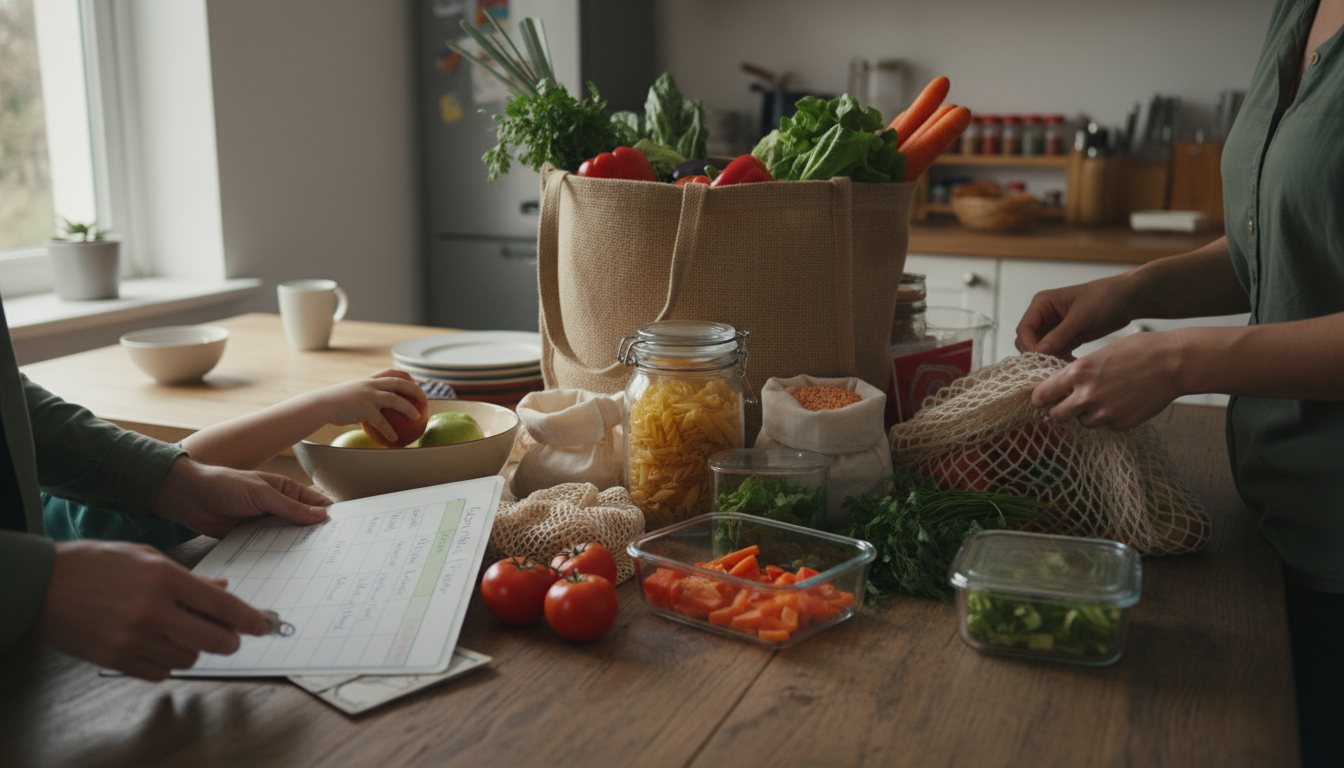
What’s the best way to grocery shop for a one-week meal plan without wasting ingredients?
The best way to grocery shop for a one-week meal plan without wasting ingredients is to plan around overlapping items, buy only what your recipes share, and schedule “use-it-up” meals before anything spoils. Start by choosing 4–5 dinners that reuse core ingredients (like spinach, tortillas, a rotisserie chicken, rice, or a bag of frozen veggies), then build breakfasts, lunches, and snacks from the same list so every purchase has multiple jobs.
For a deeper, step-by-step guide, visit the main article.
Build a waste-proof plan before you shop
Pick recipes that share ingredients and cooking methods. For example, if you buy cilantro, plan tacos one night and a grain bowl another. If you need half a cabbage for slaw, schedule stir-fry later in the week. Include one “pantry dinner” (pasta, soup, omelets) to absorb leftovers and keep the plan flexible if schedules change.
Create a smart master list
Write ingredients once, then total quantities across all meals. Separate your list by store sections (produce, proteins, dairy, pantry, frozen) to avoid impulse buys and forgotten items. Add a short “already have” check (spices, oils, rice, broth) so you don’t rebuy duplicates.
Shop with shelf life in mind
Assign meals by freshness: use delicate produce (berries, herbs, leafy greens) early; save longer-lasting items (carrots, cabbage, frozen vegetables) for later. If a recipe calls for a small amount of something perishable, choose frozen or shelf-stable alternatives (frozen spinach, canned tomatoes, jarred peppers) to cut waste.
Portion, store, and prep immediately
When you get home, wash and dry greens, portion proteins, and label leftovers with a date. Store herbs in a jar with water, keep cut veggies in airtight containers, and freeze extras the same day (bread, cooked grains, chopped onions). A 15-minute reset can save multiple ingredients from ending up in the trash.
FAQ
How can I store leftover ingredients so they stay fresh longer?
Use airtight containers, keep moisture-sensitive items dry (especially greens), and label leftovers with dates. Freeze what you won’t use within 2–3 days, like extra chopped veggies, cooked grains, and portions of meat.











Leave a comment