Under-Pillow Bone Conduction Speaker for Quiet Bedtime
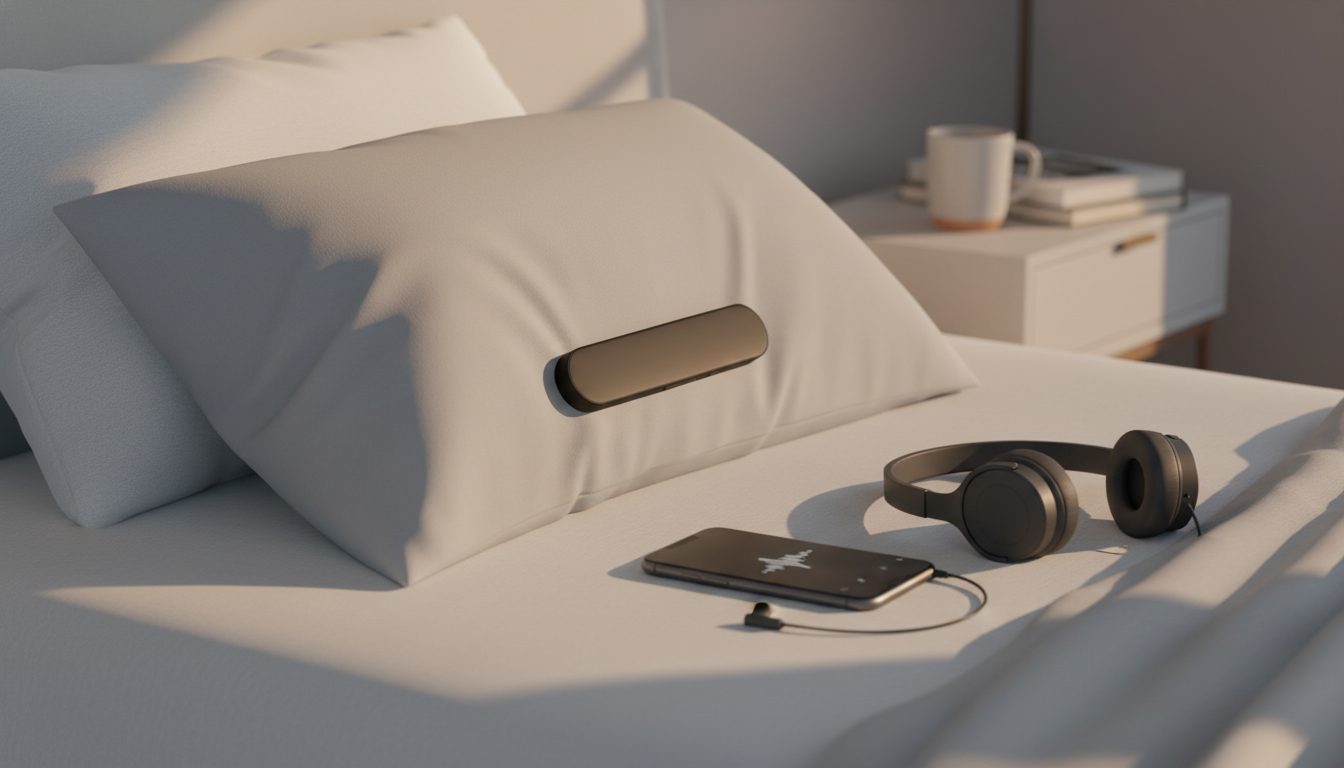
Under-Pillow Wireless Bone Conduction Bluetooth Speaker: Quiet Bedtime Audio Without Earbuds
A compact under-pillow speaker can deliver clear audio through gentle vibrations, letting bedtime playlists, white noise, or audiobooks stay personal without earbuds. Instead of broadcasting sound across the room, this style of speaker couples to your pillow so the audio feels closer to you—often allowing lower volume than a typical bedside speaker. Below is a practical guide to how bone conduction under a pillow works, what to expect for comfort and sound, and how to set it up for consistent nighttime listening.
What an Under-Pillow Bone Conduction Speaker Does
An under-pillow bone conduction speaker is designed to play audio through vibration. When it rests under or alongside your pillow, the pillow material carries those vibrations toward your head, making spoken-word content and soothing soundscapes feel more direct to the sleeper while helping reduce room-filling sound.
- Uses vibration to transmit sound through the pillow material so audio feels more direct to the sleeper while reducing room sound.
- Designed for bedtime listening: audiobooks, meditation tracks, ASMR-style soundscapes, and white noise.
- An alternative to earbuds for anyone who dislikes ear pressure or falls asleep on their side.
- Best suited to spoken word and midrange-focused audio rather than deep bass-heavy music.
- Helps keep volume lower than a bedside speaker because the sound source is close and mechanically coupled to the pillow.
How Bone Conduction Under a Pillow Works (and What It Doesn’t Do)
When the speaker vibrates, energy travels through the pillow. While you’re lying still, the head and jaw area can pick up that vibration as audible sound—especially with narration, calming voices, and steady noise textures. The effect depends on pillow material, placement, and how firmly the speaker contacts the pillow.
- Vibration travels through the pillow; the head and jaw area can pick up the energy as audible sound, especially when lying still.
- Roommates may still hear faint sound at higher volumes; “silent” playback is not realistic, but it can be significantly quieter than open-air speakers.
- Pillow type changes performance: denser memory foam often transfers vibration differently than fluffy down alternatives.
- Positioning matters more than with regular speakers: placement near the ear area typically improves clarity at lower volume.
- Not a medical device; it does not treat sleep disorders or hearing conditions.
Under-pillow audio options compared
| Option | Comfort for side sleepers | How private it feels | Best for | Trade-offs |
|---|---|---|---|---|
| Bone conduction under-pillow speaker | High (no ear insertion) | Medium–High | Audiobooks, white noise | Less bass; pillow placement sensitive |
| Earbuds | Low–Medium | High | Music, calls | Pressure/discomfort; can fall out |
| Bedside Bluetooth speaker | High | Low–Medium | Ambient music | More room noise; higher volume needed |
| Sleep headband headphones | Medium–High | High | White noise, soft music | Band heat/fit; needs washing |
Who It’s For: Realistic Use Cases
Setup Guide: Pairing, Placement, and Nighttime Controls
1) Pair before placing it under the pillow
- Enable Bluetooth on your phone or tablet and select the speaker from the device list.
- Confirm the connection and start playback at low volume before tucking it into position.
- Bluetooth behavior can vary by device; the Bluetooth Core Specification overview explains why compatibility and range depend on implementation.
2) Find the “sweet spot” with small adjustments
3) Use sleep-friendly controls
Comfort, Safety, and Bed-Friendly Tips
- Heat and pressure: Keep the speaker on the pillow surface or in a thin pillowcase pocket area (if available). Avoid thick folds that create pressure points on the cheek or jaw.
- Volume and hearing: Proximity usually means lower volume works. For hearing health basics, see the NIDCD guidance on noise-induced hearing loss.
- Bedding safety: Keep devices away from moisture, and don’t cover active electronics with heavy blankets that trap heat.
- Partner considerations: Test at the lowest volume that stays clear in your usual sleeping positions. If a partner hears it, adjust placement closer to your ear and lower the volume before assuming it won’t work.
- Cleaning: Wipe the exterior with a dry or slightly damp cloth as appropriate; avoid soaking or washing unless explicitly supported by the product instructions.
What to Look For Before Buying
Product Spotlight: Under Pillow Wireless Bone Conduction Bluetooth Speaker
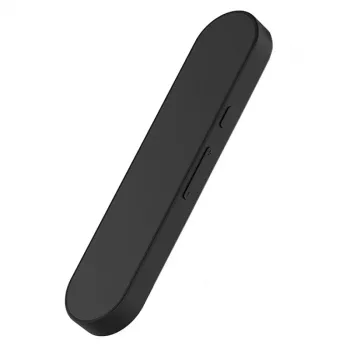
If the goal is discreet bedtime audio without earbuds, the Under Pillow Wireless Bone Conduction Bluetooth Speaker is designed specifically for under-pillow placement. It pairs over Bluetooth with phones and tablets and is especially practical for audiobooks and white-noise routines when in-ear devices feel uncomfortable. For best results, start with careful placement near the pillow edge and keep volume in the low-to-moderate range to stay unobtrusive.
Quick snapshot
| Item | Details |
|---|---|
| Product | Under Pillow Wireless Bone Conduction Bluetooth Speaker |
| Price | $22.51 USD |
| Availability | In stock |
| Best for | Bedtime audio without earbuds |
More In-Stock Finds
- Ergonomic Mesh Office Chair with Lumbar Support, Adjustable Headrest & 2D Arms
- Wooden Multiplication Board for Kids
FAQ
Will someone else in the room hear it?
It can be much quieter than a bedside speaker because the sound is coupled to the pillow, but it isn’t perfectly silent. Pillow type, placement near the ear, and volume level determine how much sound escapes into the room.
Does it work with any pillow?
It works with most pillows, but the fill and density change how vibration transfers. If it sounds weak, try repositioning closer to the ear area or testing with a denser pillow or fewer layers between the device and the pillow surface.
Is it comfortable for side sleepers?
Nothing goes in your ear, which many side sleepers prefer, but comfort depends on the speaker’s profile and where it sits. Keeping it near the pillow edge and avoiding pressure points usually makes the biggest difference.










Leave a comment