Mechanical Keypad Door Lock: 14-Key, Battery-Free Access
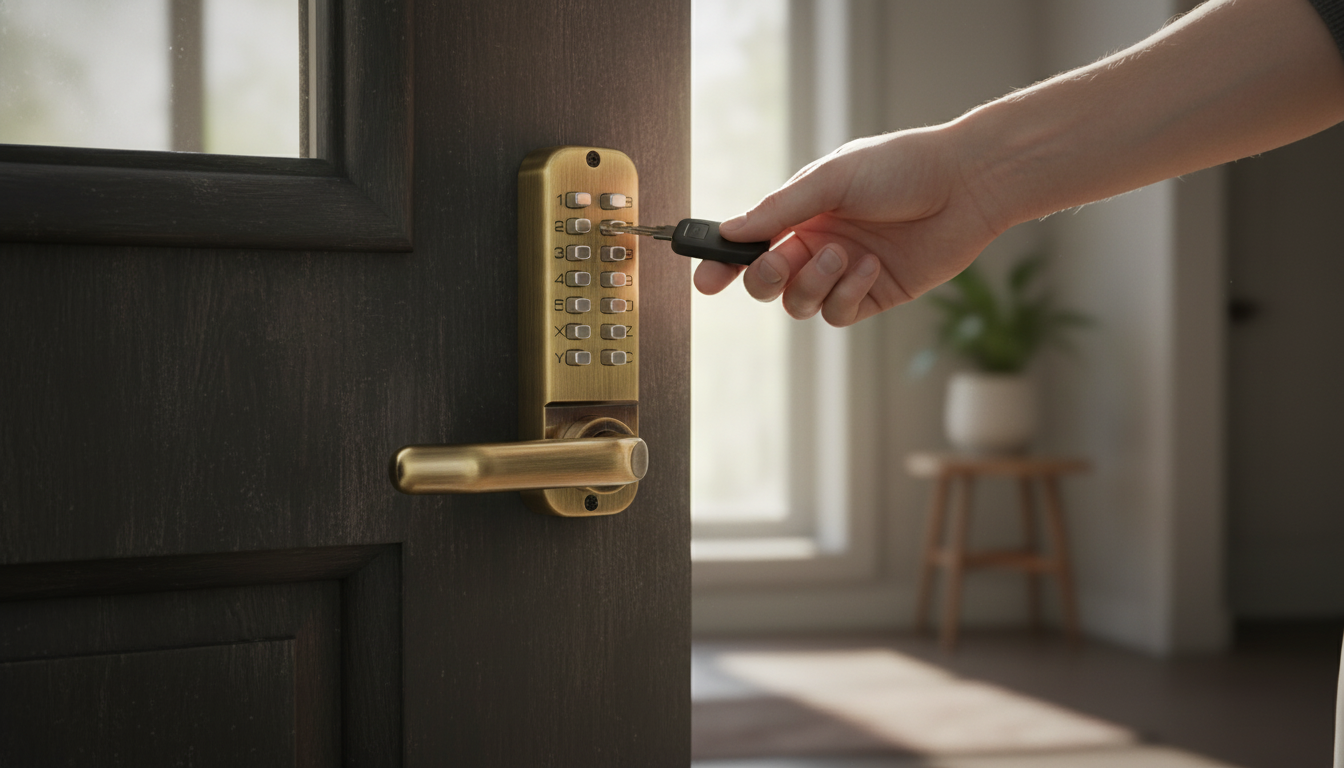
Mechanical Keyless Entry Door Lock with a 14-Key Keypad Handle: Battery-Free Access That Just Works
A mechanical keypad handle lock provides keyless access without batteries or apps, making it a practical option for busy households, rentals, workshops, side doors, and gates. Instead of relying on electronics, it uses physical push-buttons and internal linkages to retract the latch. The result is straightforward, day-to-day entry that keeps working through power outages and temperature swings—with a traditional key available when needed.
What It Is and How It Works
Mechanical keypad entry uses push-buttons to mechanically retract the latch—no wiring, no charging, and no pairing with a phone. When the correct sequence is pressed, internal components align and allow the handle to actuate the latch. Because there’s no circuit board or battery compartment, many common “smart lock” failure points simply don’t apply.
A 14-key keypad increases the number of possible code combinations and can also reduce visible wear from repeated use of the same few digits. Over time, that can help keep the keypad looking more uniform—especially on doors that see frequent traffic.
Many mechanical keypad handles also include a keyed override. This is useful for lockouts, emergencies, or situations where a trusted person needs access without learning (or remembering) the code. These locks are generally best suited to doors where simple, durable access matters more than remote features like app control or activity logs.
When a Mechanical Keypad Handle Makes the Most Sense
Rental properties and guest access
For rentals, guest suites, and short-term stays, mechanical keypad entry avoids distributing stacks of keys and cuts down on support calls tied to dead batteries. Code changes are typically done on the lock itself, keeping turnover logistics simple.
Garages, workshops, sheds, and side entries
If you’re coming in with gloves, tools, or dirty hands, a keypad handle can be faster than digging for keys or opening an app. Mechanical designs also eliminate the “battery died at the worst time” problem for secondary doors that may be used sporadically.
Small offices and back-of-house doors
For staff access where straightforward operation matters, a mechanical keypad is easy to explain and quick to use. There’s no onboarding process, no phone permissions, and no dependency on Wi-Fi coverage in utility areas.
Extreme hot/cold environments
Temperature swings can affect battery performance and some electronics. A purely mechanical lock avoids that specific weakness, making it attractive for unconditioned spaces or exposed entries (with appropriate weather protection).
Key Features to Check Before Buying
Door prep and thickness compatibility
Handing and orientation
Latch and strike quality
A smooth latch action and a sturdy strike plate make a noticeable difference. If the latch drags or the strike flexes, you’ll feel it every time you enter, and the door may rattle. For a deeper look at hardware performance benchmarks, BHMA’s standards information is a helpful reference: Builders Hardware Manufacturers Association (BHMA).
Weather exposure and corrosion resistance
User flow and code management
Mechanical vs. Electronic Keypad Locks
| Feature | Mechanical keypad handle | Electronic keypad lock |
|---|---|---|
| Power required | None | Batteries (sometimes hardwired) |
| Remote access/app | No | Often yes |
| Cold/heat resilience | Generally strong | Depends on batteries/electronics |
| Maintenance | Cleaning + occasional lubrication | Battery replacement + cleaning + possible resets |
| Code changes | Varies by mechanism; usually manual | Typically easy via keypad/app |
| Best for | Reliable everyday access without power concerns | Smart home features, multiple users, logging |
Installation Overview and Fit Checks
After mounting, tighten hardware evenly and test from both sides with the door open, then closed. The keypad should retract the latch consistently with a normal press sequence. For exterior doors, consider reinforcing the strike with longer screws that bite into the stud for better resistance to forced entry. If this door is part of an egress path, keep safety in mind and follow applicable guidance for safe exits: NFPA home fire safety resources.
Daily Use, Code Hygiene, and Practical Security
If your lock supports multiple codes, assign unique codes for tenants or staff and rotate them on a schedule that matches your turnover or staffing changes. As a general authentication principle, unique credentials are easier to manage and revoke than shared ones; NIST’s digital identity guidance offers useful context on credential hygiene: NIST SP 800-63-3.
Care, Maintenance, and Troubleshooting
Recommended Product Options (In Stock)
Primary pick: Mechanical keypad reliability
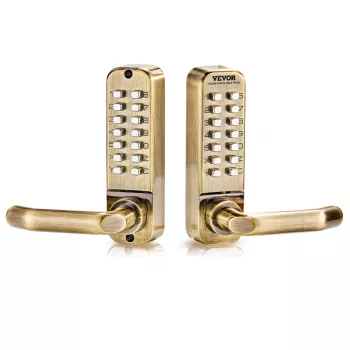
Mechanical Keyless Entry Door Lock with 14 Key Mechanical Keypad Handle is a battery-free keypad handle design with a keyed backup option for straightforward access control. It’s a strong fit for rentals, garages, workshops, and secondary entries where dependable operation matters more than smart features.
Helpful add-on for entry monitoring
For properties that need an extra layer of documentation or visibility around entry areas, Ultra HD 4K WiFi Body Camera with Night Vision & Motion Detection can support security routines such as walkthroughs, after-hours checks, or incident documentation—especially in workshops or back-of-house environments.
FAQ
Does a mechanical keypad door lock need batteries?
No. A mechanical keypad lock uses internal mechanical linkages to retract the latch, so it doesn’t require batteries, charging, or wiring, and the keyed backup remains usable regardless of power.
Can a mechanical keypad lock be used on an exterior door?
Yes, as long as the lock and door setup are suitable for outdoor conditions. Choose corrosion-resistant materials, avoid direct weather exposure when possible (like under an overhang), and clean the keypad periodically to keep button action consistent.
What should be checked if the keypad retracts the latch with the door open but not when closed?
This usually points to alignment issues: the strike plate may be slightly mispositioned, the door may be sagging, or weatherstripping may be too tight. Adjust the strike so the latch enters smoothly and consider reinforcing the strike with longer screws for a tighter, more secure fit.







Leave a comment